Walton Science Olympiad Tournaments 2025-26
See the tournament events at the bottom of this page.
First Semester
| Tournament | Date |
| 1 | |
Second Semester
| Tournament | Date |
| 1 | |
| *States (Georgia Tech) | April 4, 2026 |
| *Nationals (University of Southern California) | May 22-23, 2026* |
| *top team only | |
| SAT Dates | 10/4, 11/8, 12/6, 3/14 |
*Satellite Tournament, will happen in Walton High School in the classroom.
🏆 Recent Major Achievements
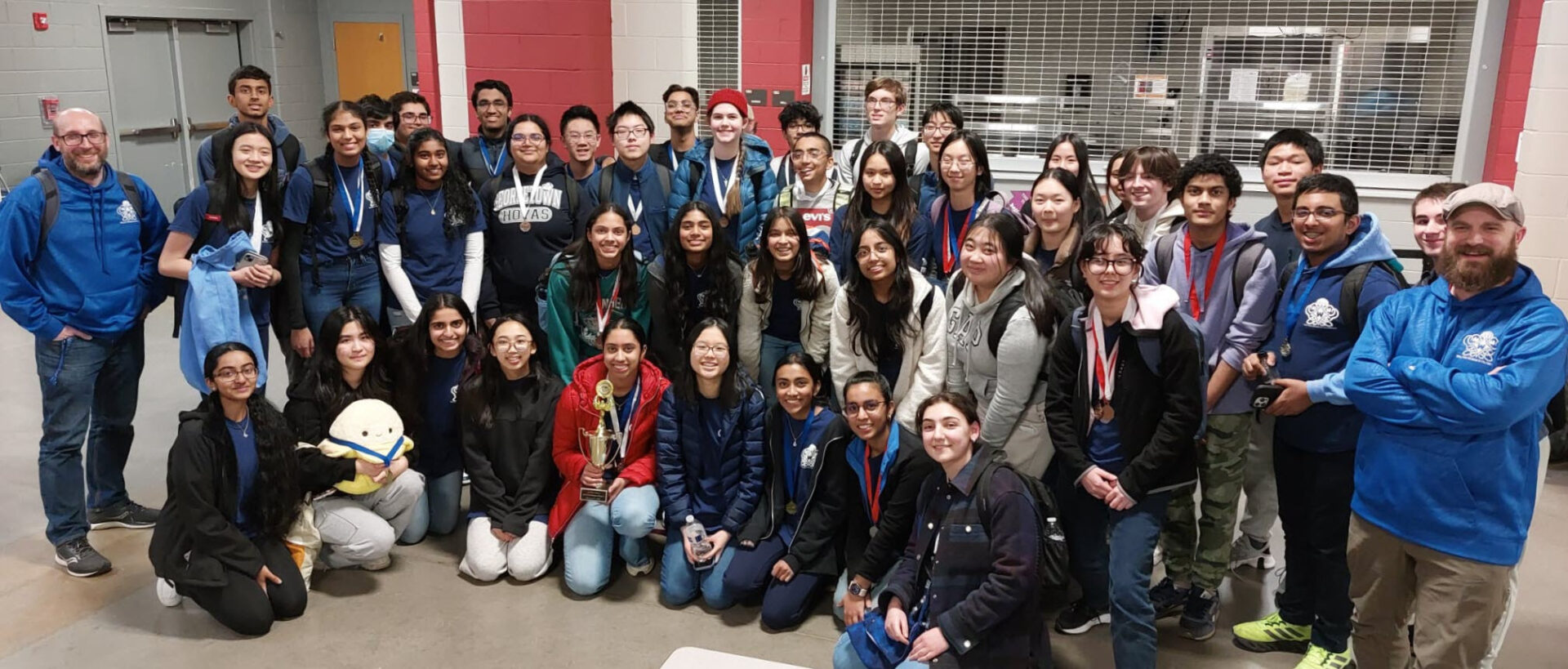
- 1st Place Overall at the University of Northern Georgia Regionals 2026
- 1st Place Overall at the Brookwood SciOly Invitational 2026 (Jan 17, 2026)
- Multiple top medals earned across events
📚 2024 Achievements
UGA Invitational (2024):
- 1st Place among 31 top Southeast teams
- Led by Captain Medha Krishna
- 🥇 8 Gold | 🥈 4 Silver | 🥉 3 Bronze medals
Forsyth Central Invitational:
- 2nd Place among 38 Georgia teams
- 45 Walton students competed
🚀 2022–23 Academic Year Highlights
3rd Place at State level
60 students participated in 7 tournaments
12,900 total student training hours (avg. 215 hours per student)
🥇 48 Gold | 🥈 60 Silver | 🥉 64 Bronze medals
2nd Place at CarSO (Carolinas Science Olympiad)
2nd Place at Regionals
🔬 Science Olympiad – High School (Division C) Events
Event Categories & Quick Overview for Parents
Science Olympiad competitions allow students to explore different STEM fields through tests, labs, and engineering builds. Each event is done by a team of two students.
Event Type Legend
📘 Study Event – knowledge-based test and identification
🧪 Lab Event – hands-on experiments and analysis
🛠 Build Event – design and construct a device before competition
💻 Coding / Technology – programming or computational challenges
🌍 Earth & Environment – geology, climate, and environmental science
🧬 Life Science – biology and human health
🔭 Physical Science & Chemistry
🔭 Astronomy – 📘
Students study stars, galaxies, and cosmic phenomena. Competitors analyze images, charts, and astrophysics data.
🧪 Chemistry Lab – 🧪
Students perform chemistry experiments involving reaction rates, stoichiometry, and chemical analysis.
🕵️ Forensics – 🧪
Teams analyze simulated crime scene evidence such as powders, fibers, fingerprints, and chromatography results.
⚛️ Materials Science (Nanomaterials) – 📘
Students study modern materials at the nanoscale and their applications in electronics, medicine, and engineering.
⚙️ Technology & Engineering
🏗 Boomilever – 🛠
Students build a lightweight wooden structure that must support as much weight as possible.
🚗 Electric Vehicle – 🛠
Teams design and build a battery-powered vehicle that travels a specific distance as accurately as possible.
🚁 Helicopter – 🛠
Students build a rubber-powered helicopter designed to stay in the air for the longest possible time.
🤖 Robot Tour – 💻🛠
Teams program an autonomous robot to navigate a course and complete tasks without human control.
🪂 Bungee Drop – 🛠
Students design a cord system that drops an object to stop as close as possible to a target point.
📐 Engineering CAD – 💻
Participants apply computer-aided design principles to solve engineering design challenges.
🌎 Earth & Space Science
🌊 Dynamic Planet (Oceanography) – 🌍📘
Students study ocean systems including currents, marine geology, and the ocean’s role in climate.
🛰 Remote Sensing – 🌍📘
Participants analyze satellite imagery and geographic data to study Earth systems and environmental changes.
🪨 Rocks and Minerals – 🌍📘
Students identify rocks and minerals and learn about their formation and properties.
🧬 Life, Personal & Social Science
🧠 Anatomy & Physiology – 🧬📘
Students study the human nervous system, sense organs, and endocrine system.
🧬 Designer Genes – 🧬📘
Focuses on genetics, biotechnology, DNA analysis, and modern gene editing technologies.
🦠 Disease Detectives – 🧬📘
Students act as epidemiologists investigating disease outbreaks using real-world data.
🐞 Entomology – 🧬📘
Competitors identify insects and learn about their anatomy, classification, and ecological roles.
💧 Water Quality – 🌍🧪
Students analyze freshwater ecosystems, aquatic organisms, and environmental indicators.
🌿 Additional STEM Events
🌱 Botany – 🧬📘
Students identify plants and study plant biology, structure, and ecological roles.
💻 Code Craze (Trial Event) – 💻
Programming and computational problem-solving challenges.
🪂 Ping Pong Parachute (Trial Event) – 🛠
Students design a parachute to safely drop a ping-pong ball from a height.
🧫 Protein Modeling (Trial Event) – 🧬
Students build physical or digital models of proteins to understand biological structure and function.
✔ Competition Structure
- Teams of two students per event
- Events include written exams, lab experiments, and engineering builds
- Top teams advance from regional → state → national tournaments